
How to Look Up Guilford County Jail Population Data
Population data comes from official reports, not a single live counter. The Sheriff's Office runs the jail and is the first source for any local count. Its detention centers page describes the facilities. County budget documents and sheriff budget files can list rated capacity, average daily population, and cost figures when the county chooses to publish them. For broad context, national agencies track jail trends across states and counties.
Start with the county, then widen out. Check the sheriff and county budget for local figures. Use national data sources for state and county-level estimates and trends. Always note the date and the measure, because a number from 2019 is not a number from today, and a one-day count is not an average.
Note: a single roster count is a snapshot, not an average daily population, so do not treat one day's total as the year's typical number.
Guilford County Jail Capacity Overview
The county runs detention on the Greensboro side and the High Point side. Capacity means the rated or design number of beds a facility can hold. It is set by the building and by operating rules, not by how many people are booked on a given day. Official capacity for each Guilford County facility was not located in the public county materials reviewed, so the table below marks those values honestly and points to the source that would carry them.
| Facility | Official Capacity | Source |
|---|---|---|
| Greensboro Detention Center | Not located in public county materials reviewed | Sheriff detention page / county budget |
| High Point Detention Center | Not located in public county materials reviewed | Sheriff detention page / county budget |
To compare capacity against use, you need both the rated capacity and the average daily population from the same official report. Without both, no one can say a jail is over or under capacity. A jail can also run two facilities with separate bed counts, so a county total should add the Greensboro and High Point figures from the same report. For a name search instead of a count, use the page on Guilford County inmate records.
Snapshot Counts vs Average Daily Population
These terms get mixed up often. They measure different things. Knowing the difference is the key to reading any jail report.
- Capacity - the rated or design number of beds for a facility.
- Snapshot count - the number in custody at one moment, like a roster on one day.
- Average daily population - the average number held per day over a set period.
- Booking count - admissions over a period; one person can be booked more than once.
- Release count - discharges over a period; a release does not always mean the case is closed.
A roster you read this morning is a snapshot. It can swing day to day with arrests, court dates, and releases. The average daily population smooths those swings. When a report gives a single big number, check which measure it used before you compare it to anything.
Demographic Breakdown
A demographic breakdown sorts the jail population by sex, age, and race. These numbers should come from an official jail report, the county budget, or a national data source. They should not be built from one day's roster, because a single day can skew high or low. The research reviewed did not locate an official Guilford County demographic table in one public source, so any breakdown should be drawn from a dated county report or a national profile and labeled as such.
When you do find a breakdown, read it with care. A percentage means little without the total and the date. Compare like to like. A county figure and a national figure are not the same measure unless both use the same method.
Some special groups need their own care. People with mental health or medical needs should be counted from an official jail needs assessment or the county budget, not from news reports. Cost per inmate per day and staffing ratios belong to the sheriff budget or a jail inspection report. Female and male counts should rest on an official report rather than one day on the roster. None of these numbers were located for Guilford County in the public materials reviewed, so any figure should carry its source and date.
Pretrial vs Sentenced Population
The jail holds two main groups. Pretrial people are not yet convicted or sentenced in the current case. Sentenced people are serving a local term or waiting to transfer to state prison. The split matters for policy, because pretrial detention often ties to bond and court backlog rather than a finished case.
| Group | Who They Are |
|---|---|
| Pretrial | Held before trial or plea; case not yet resolved |
| Sentenced (local) | Serving a county sentence in the jail |
| Awaiting transfer | Sentenced to state prison, held until the state takes custody |
| Holds | Held for another agency, probation, a warrant, or federal process |
A jail can hold people for other agencies too. These holds count in the total but do not always belong to a Guilford County charge. Official reports separate these groups when the county publishes them.
The pretrial share carries real weight. A large pretrial group can point to bond practice, case backlog, or longer waits for a hearing rather than more crime. A booking is an admission, not a conviction. To see how a single case moves from arrest to disposition, the page on Guilford County court records walks through the case fields, and court dockets show how hearings are set.
Misdemeanor vs Felony Population
Charge level shapes who stays in jail. Misdemeanor cases often move through District Court and may resolve faster. Felony cases run through Superior Court and can mean longer pretrial stays, higher bonds, and transfer to state prison after sentencing. A felony hold is not proof of guilt; it reflects the charge and the bond decision.
Length of stay drives population as much as the number of bookings. Many short stays and a few long stays can produce the same daily count in very different ways. For the charge side of a case, see Guilford County arrest records and court records.
National and State Context
When local numbers are thin, national sources give context. The Bureau of Justice Statistics publishes jail and prison population reports for the nation and the states. These reports explain trends, measures, and definitions that apply to any county jail, including those in Guilford County.
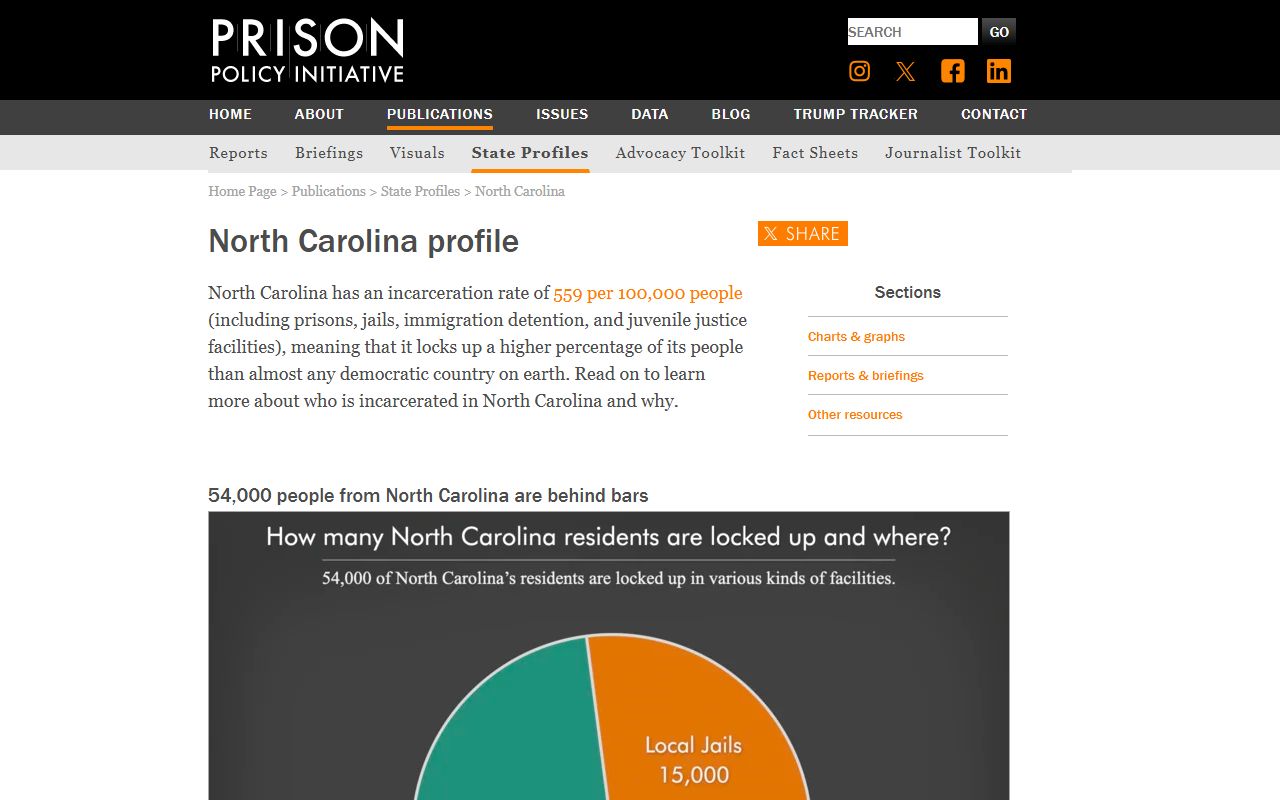
State context helps too. The Prison Policy Initiative keeps a North Carolina profile with incarceration figures for the state. Use it to see where North Carolina sits against national rates, then treat any county claim as separate unless a county source confirms it.
The table below shows how a rate comparison should be framed. The county row stays blank on purpose, because a verified Guilford County rate was not located in the public materials reviewed.
| Level | Incarceration Rate per 100,000 | Source |
|---|---|---|
| Guilford County | Not published in reviewed county materials | Sheriff / county budget needed |
| North Carolina | See current state figure | Prison Policy Initiative NC profile |
| United States | See current national figure | Bureau of Justice Statistics |
Population Trends Over Time
A trend needs several years from the same measure and source. A useful window covers the years before COVID, the COVID-era drop in many jail populations, and the rebound that followed. Many jails saw counts fall in 2020 and rise again later. Whether Guilford County followed that pattern needs a dated county report to confirm.
Read trends with caution. A change can come from more bookings, longer stays, court backlog, or policy shifts. Do not assign a cause unless an official source states it. And never describe a jail as overcrowded without both a confirmed capacity and a confirmed average daily population from the same report.
A clean trend write-up follows a simple order. Name the source and the measure first. Show a multi-year table only when official numbers exist. Note the COVID-era disruption. Compare capacity to average daily population only if both are confirmed. Then close with the data caveats. That order keeps a population page honest and easy to check.
Note: Treat every Guilford County population figure as source-and-date specific, and never compare a county snapshot to a state or national average.
Searching Guilford County Inmate Records by Name
Population data covers people as a group, not a single person. To find one inmate by name, booking, charges, or bond, use the page on Guilford County inmate records, which explains the Sheriff's roster search. For release status, see released inmates. A roster lookup answers "is this person in jail," while population data answers "how many people are in jail and who are they."
Where the Data Comes From
Good population writing names its source and measure every time. County figures should come from the Sheriff's Office or the county budget. National and state figures come from agencies that study incarceration. The Bureau of Justice Statistics keeps current reports at its main site.
When numbers conflict, the official county report wins for local counts, and the national agency wins for national rates. Mark each figure as county, state, or national so readers can compare the right things. That honesty is what makes a population page trustworthy. If a figure has no clear source, treat it as a claim, not a fact, and look for the report behind it before you repeat it.