
How to Find Recently Released Guilford County Inmates
The county inmate roster at guilfordcountysheriff.policetocitizen.com lists people currently in custody at the Guilford County detention facilities. When someone is released, they typically drop off that roster. That is a feature of how the system works, not a flaw. The roster shows who is in custody right now. It is not a historical log of everyone who has ever been held.
The recent arrests module is the better tool for finding someone who passed through local custody in the recent window. That module, at guilfordcountysheriff.policetocitizen.com/RecentArrests/Catalog, can show booking data for people arrested during the module's configured window, including those already released. The window depends on how the Sheriff's Office configures the module, so entries do not stay visible indefinitely. If the window has passed, call the detention center directly.
For time-sensitive situations, a phone call to the Guilford County Sheriff's Office detention center is faster than any online portal. Online rosters can lag behind actual release by hours, especially for bond releases that require paperwork processing. A bond can be posted before the roster reflects the change. Sentence releases follow jail-calculated schedules, and court-order releases depend on when paperwork reaches booking staff. The tools below cover different custody types. Use all of them when you are unsure where the person went after Guilford County.
The recent arrests module on the Police-to-Citizen platform at the Guilford County Sheriff's recent arrests page is the starting point for recent local releases.
Release does not always mean all holds are lifted. A person can be released from one charge and remain in custody on another hold, a probation detainer, or an out-of-county warrant. Always confirm full custody status before assuming release is complete. If the person was moved to another facility, whether county, state, or federal, a different locator is needed.
Setting Up Guilford County Release Notifications
VINELink is the official victim notification network. It lets victims and other registered parties receive automatic alerts when an inmate's custody status changes. A change can mean release, transfer, escape, or a return to custody. The service is free. Registration does not require legal standing in a case. Anyone who wants notice of a custody change can sign up.
To use VINELink for a Guilford County released-inmate notification, go to vinelink.vineapps.com and select North Carolina. Search for the person by name or offender ID. Once you locate the right record, register your phone number or email to receive alerts when that person's status changes. You can register for text, voice call, or email notification, or any combination.
VINELink coverage at the county level depends on whether the Guilford County Sheriff's Office participates in the VINE network. For state prison releases, the NC Department of Adult Correction also connects to VINE. This means a single registration can follow someone from county jail through transfer to state prison. If the person moves between facilities, the system should still alert you as long as both agencies report to VINE. Registration is not a guarantee of instant notice; allow some delay for database updates and message delivery.
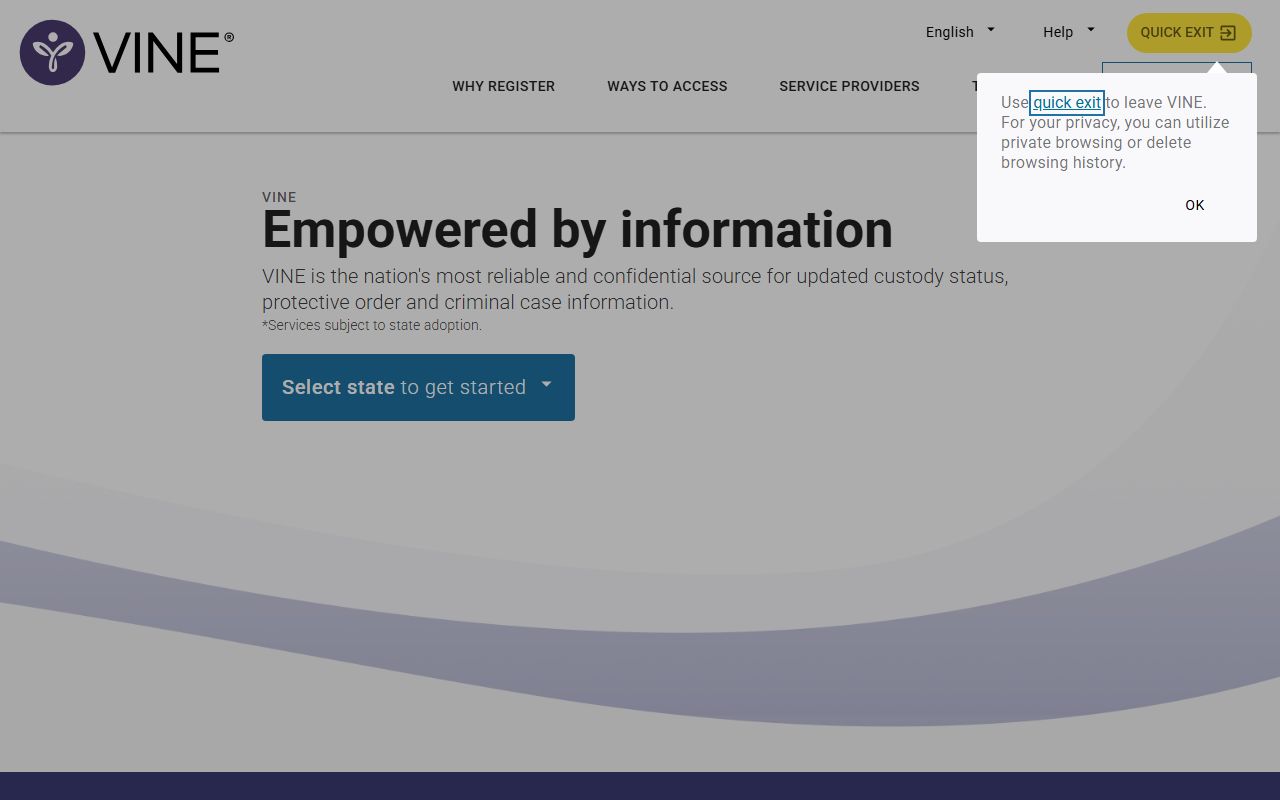
The VINELink search and registration fields for North Carolina are:
| Field Label | Type | Required | Notes / Format |
|---|---|---|---|
| State | Dropdown | Yes | Select North Carolina |
| Name / ID | Text | Optional | Search by offender name or offender ID number |
| Agency / facility | Dropdown / filter | Optional | Narrows to a county facility or state agency if available |
| Notification registration | Form | Conditional | Phone, email, or text after selecting the person and case |
Note: VINELink is for custody notification, not a full archive of jail stays. It cannot substitute for a certified court record or a direct call to the facility for official release confirmation.
Searching State and Federal Released-Inmate Records
When someone leaves Guilford County custody by transfer to state prison, they are no longer in the county system. County jail holds pretrial detainees and people serving short local sentences. State prison holds sentenced felons under the care of the North Carolina Department of Adult Correction. The two populations are distinct and require different search tools.
The NC DAC offender public information search covers people sentenced to state supervision, currently incarcerated in a state facility, or on probation or post-release supervision under state authority. It is not a county jail roster and does not cover pretrial detainees held in Guilford County. If the person received a state prison sentence, use this tool. If they are serving a county sentence, use the Sheriff's P2C portal and phone confirmation. Additional information about the offender search program is available on the NC DPS offender search information page.
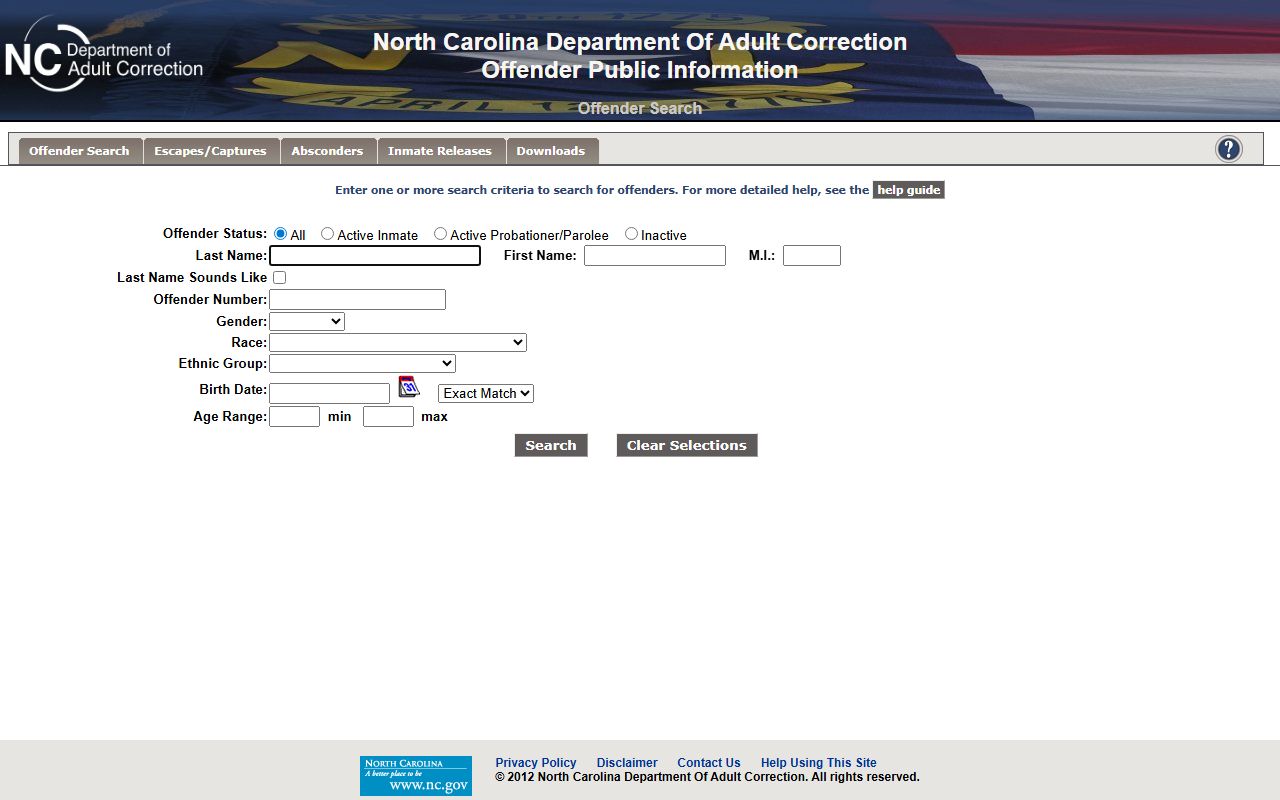
The NC DAC offender search fields are:
| Field Label | Type | Required | Notes / Format |
|---|---|---|---|
| Offender number | Text | Optional | Most precise identifier; use if known from court or DOC records |
| Last name | Text | Optional | Use at minimum if offender number is unknown |
| First name | Text | Optional | Narrows common last names |
| Gender / race / age filters | Dropdown / text | Optional | Available depending on current form version |
| Search | Button | Yes | Runs query against NC DAC database |
A typical NC DAC offender profile shows the person's name, offender number, gender, race, and birth date or age. It also shows current status, current location or supervision level, custody classification when public, the underlying offense, sentence begin and end dates, and projected release or parole dates where publicly available. Prior incarceration or probation data may appear depending on how the record is structured in the system.
For federal custody, the Bureau of Prisons inmate locator at bop.gov/inmateloc covers federal inmates from 1982 forward and includes people currently in federal custody as well as those released from BOP custody. Guilford County residents charged with federal offenses are prosecuted in the U.S. District Court for the Middle District of North Carolina. After conviction, federal inmates may be placed in any BOP facility nationwide, not necessarily in North Carolina.
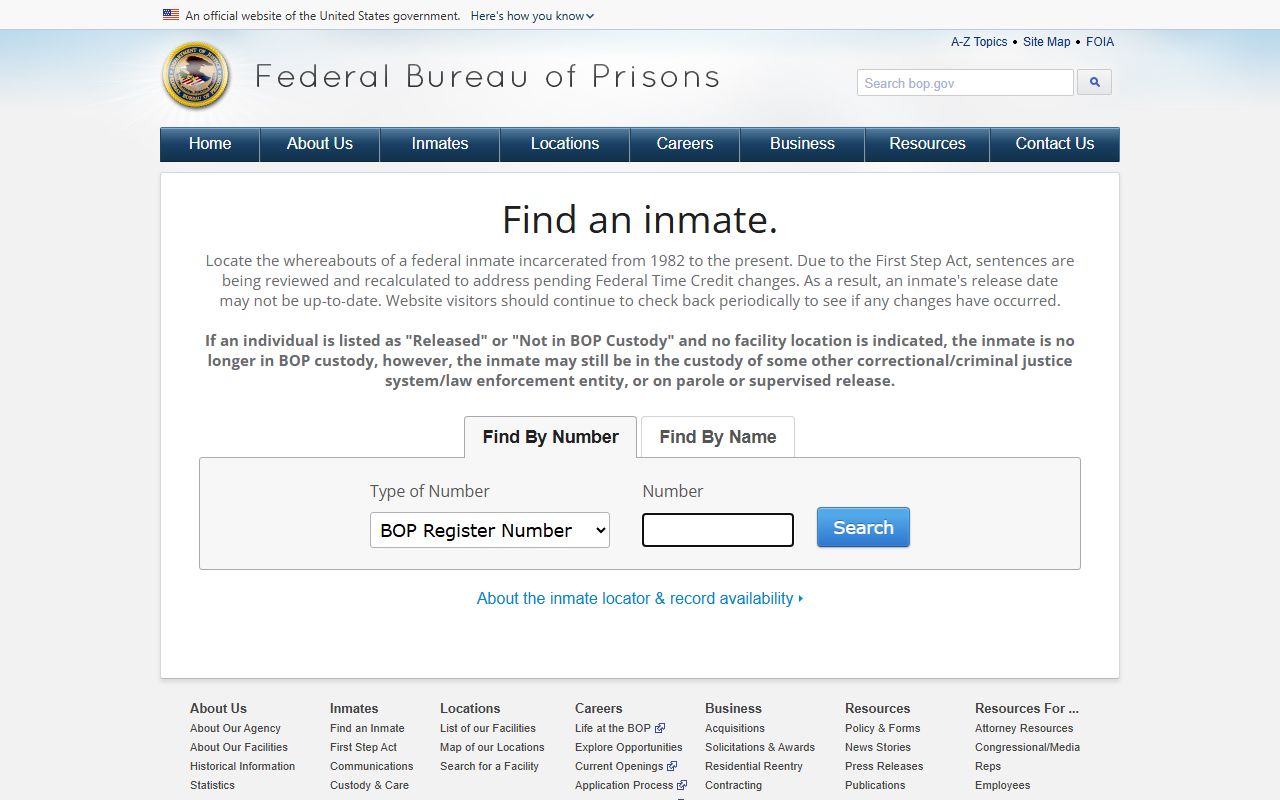
The BOP inmate locator search fields are:
| Field Label | Type | Required | Notes / Format |
|---|---|---|---|
| BOP Register Number / DCDC / FBI / INS number | Text | Optional | Most precise; use any BOP or federal ID number if known |
| First name | Text | Optional | Use with last name for a name search |
| Last name | Text | Optional | Required for name searches when no ID is available |
| Race | Dropdown | Optional | Narrows results for common names |
| Age | Text | Optional | Optional filter |
| Sex | Dropdown | Optional | Optional filter |
A person can move from county jail to federal custody, then to state prison, or in reverse order. Using all three tools together, the Sheriff's P2C, the NC DAC search, and the BOP locator, gives a complete picture when custody history crosses jurisdictions. Each tool answers a different part of the question.
Verifying a Guilford County Release by Phone
Online portals are a starting point. They are not release guarantees. Custody status changes fast. A bond posted at noon may not appear in the online roster until evening. A court order issued at a morning hearing may take time to reach booking staff. If you need a confirmed answer, call the Guilford County Sheriff's Office detention services directly.
The official detention center contact information is on the Guilford County Sheriff's Office at guilfordcountync.gov/government/sheriff-s-office/detention-centers. Guilford County operates detention facilities in both Greensboro and High Point. Confirm which facility holds the person before calling, because the two locations have separate staffs. The eCourts Portal may show a court date but does not show real-time custody status; custody always flows through the detention center, not the court system's case portal.
When you call, have the person's full name, date of birth, and booking number if you have it. Ask specifically whether the person has been released, transferred, or is still in custody. If they were transferred, ask where. A transfer to state prison means the NC DAC offender search is the next tool to use. A transfer to another county means calling that county's detention facility. Some releases happen faster than others. Bond releases follow payment and verification. Sentence releases happen on the release date calculated by jail records staff. Court-order releases wait for paperwork. Each type has a different timeline.
The NC Sex Offender Registry After Release
Release from custody does not remove a person from the sex offender registry if they have a qualifying conviction and a registration obligation. The North Carolina State Bureau of Investigation maintains the official registry at sexoffender.ncsbi.gov. Registration is a separate legal obligation from incarceration. A person required to register must do so regardless of whether they are on probation, parole, or completely unsupervised after release.
The SBI registry is free to search. You can look by name, address, city, county, ZIP code, or registration number. A geographic search around a specific address or within a radius is also available. The registry shows active registrants; it is not a historical list of everyone who has ever been required to register in North Carolina. Use the county or city fields to narrow results to Guilford County or specific cities such as Greensboro or High Point.
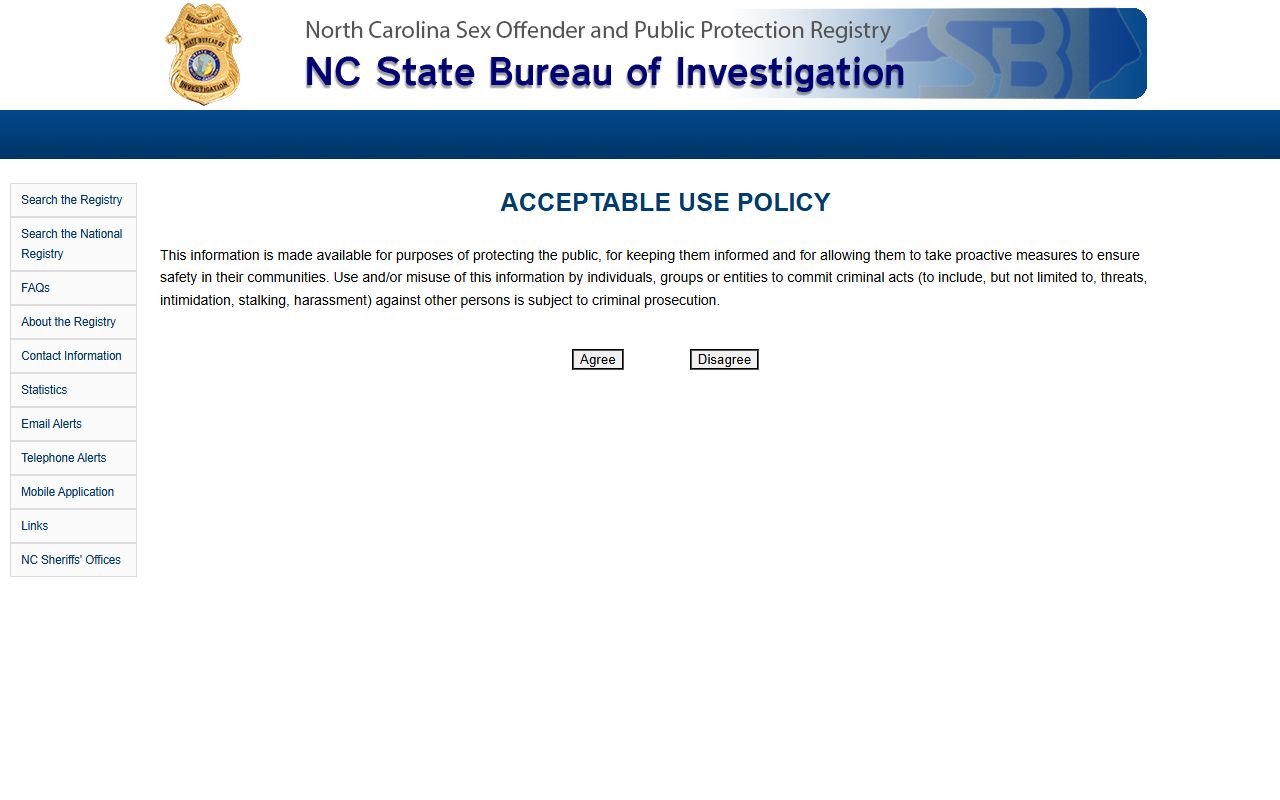
The NC SBI sex offender registry search fields are:
| Field Label | Type | Required | Notes / Format |
|---|---|---|---|
| Name | Text | Optional | Search by registrant name; use last name alone or full name |
| Address / city / county / ZIP | Text / dropdown | Optional | Use "Guilford" for county or enter a city name such as Greensboro or High Point |
| Radius | Dropdown | Optional | Distance search is available when an address is entered |
| Registration number | Text | Optional | Most precise; use if known from the court or DOC record |
| Search | Button | Yes | Runs the registry query |
Registry status depends on the qualifying conviction and registration law. Not every person released from Guilford County detention will appear on the registry. The registry covers only those with a conviction and a legal obligation to register in North Carolina. Questions about a specific person's registration obligation should be directed to an attorney or the SBI.
Parole and Probation After Guilford County Release
Many people released from state prison in North Carolina are placed on post-release supervision, which is the state's version of parole for people serving sentences under the Structured Sentencing Act. Probation is a separate form of supervision imposed as a sentence or as a condition of a suspended sentence. Both are managed by the North Carolina Department of Adult Correction's Division of Community Supervision.
Release from Guilford County jail does not automatically mean the person is free of all supervision. A person can be released from county jail onto probation for a misdemeanor or a suspended felony sentence. They can leave state prison onto post-release supervision. Each situation carries conditions set by a court order or supervision plan. Violation of those conditions can result in a new arrest and return to custody. The NC DAC offender search may show supervision status for state offenders, but county probation matters are tracked through the Clerk of Superior Court and court case records in the eCourts Portal.
Victims who are concerned about supervision compliance can use VINELink for custody-change alerts. Compliance questions about a specific supervision case should be directed to the supervising officer or the DAC Division of Community Supervision. Members of the public generally do not have direct access to supervision case files, but they can monitor custody status changes through official notification tools.
Note: Probation and post-release supervision conditions are individual. They are set in the court order or supervision plan for each person. What applies to one case may differ significantly from another.
Reentry Resources in Guilford County
People released from jail or prison often face immediate practical needs. Identification documents, housing, employment, healthcare access, and transportation are common challenges in the days and weeks after release. Guilford County is part of the Triad region and has access to several official and nonprofit reentry resources that cover these areas.
Some of the most pressing post-release needs include:
- State ID and documents - Released people often need a state ID, Social Security card, birth certificate, or driver's license reinstatement to access services or employment.
- Employment assistance - NCWorks Career Centers are state workforce resources that serve job seekers, including people with criminal records. Goodwill Industries of Central North Carolina and local workforce boards also provide support.
- Healthcare access - Medicaid eligibility, behavioral health services, and substance-use treatment can be critical in the first weeks after release.
- Housing - Emergency shelters, transitional housing, and sober living resources are available from official and nonprofit sources; check current availability directly with providers.
- Driver's license - Traffic debt, DWI suspensions, insurance requirements, and DMV holds can affect reinstatement. Check with the NC DMV for the specific hold reason before attempting reinstatement.
Legal Aid of North Carolina provides free civil legal help to people who qualify based on income. Their services can cover housing rights, public benefits, expunction of eligible criminal records, consumer debt, and family safety matters. Civil legal help is separate from criminal defense; Legal Aid is not a public defender. People with pending criminal charges must use the court's indigency process to seek appointed counsel. The NC Department of Adult Correction also maintains reentry resources on its official website for people returning from state supervision.
Legal Aid of North Carolina
Statewide civil legal aid organization with Triad-region services. Provides free legal help in civil matters to qualifying clients based on income. Contact through the official website for eligibility information and current intake procedures.
Civil Rights Restoration After Release
A felony conviction can affect several civil rights, including the right to vote and, separately, the right to possess firearms. Restoration rules vary by right. Each area has its own statutory framework and its own process, and they do not all restore at the same time or through the same steps.
Voting rights: North Carolina restores voting rights after a person completes their felony sentence, which includes all terms of probation and post-release supervision, not just incarceration. Once all supervision ends, the right to vote is restored under current state law. The exact rule and any changes to it should be verified with the North Carolina State Board of Elections before acting on it. Registration and eligibility questions are handled by the State Board and the county board of elections, not the court clerk.
Firearm rights: Federal and state firearm laws are separate frameworks, and the interaction between a state felony conviction and the right to possess firearms is not resolved by sentence completion alone. This area is legally complex. Anyone seeking to understand their firearm rights after a felony conviction should consult an attorney and review the applicable statutes rather than relying on general guidance. A mistake here can carry serious criminal consequences.
Expunction of a felony conviction is a separate process from sentence completion. If a record is expunged under the applicable North Carolina statute, different rules may apply to eligibility and restoration than those that apply when a conviction remains on the record. See the North Carolina expunction statutes in Chapter 15A, Article 5A for the statutory framework, and speak with an attorney about whether a conviction qualifies. The Legal Aid of North Carolina website lists resources that may include expunction clinics for eligible clients.
Other civil consequences of a conviction can include professional licensing restrictions, public housing eligibility limits, and student aid considerations. Each of those is governed by separate rules and separate agencies. The court clerk and jail staff cannot give advice on any of them. An attorney, Legal Aid of North Carolina, or the North Carolina Bar Association lawyer referral service can help connect people with appropriate legal guidance.
Released inmates with active Guilford County inmate records, Guilford County jail population questions, outstanding warrant records, or broader criminal records concerns can find more information on those pages. For questions about the underlying court case, the Guilford County court records FAQ covers common questions about how to search, what records are public, and how to request certified copies.