
Guilford County Has No Separate Probate Court
Many states use a dedicated probate court, but North Carolina does not. There is no elected probate judge in Guilford County. Instead, estate administration and related proceedings fall under the authority of the Clerk of Superior Court. The clerk's office has a dedicated Estates Division that handles all probate and estate matters for the county. This is the central fact any searcher needs before looking for Guilford County probate records.
The Clerk of Superior Court is a constitutionally recognized official within the North Carolina Judicial Branch. The clerk has judicial authority over estates, guardianships, incompetency proceedings, foreclosures, and other special proceedings. That authority comes directly from state law, not from an assignment by a judge. So when someone says "probate court" in Guilford County, they mean the Estates Division of the Clerk of Superior Court. The forms, filing procedures, and fees all flow through that office.
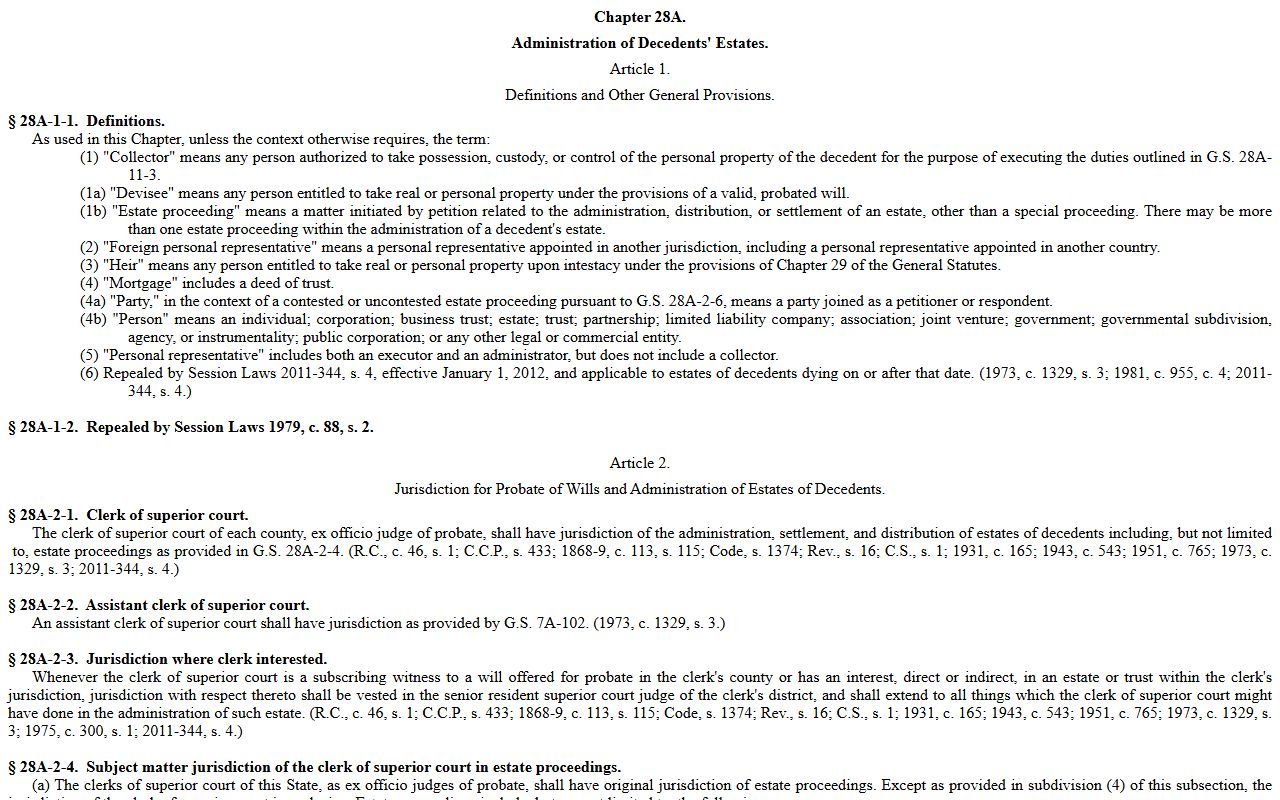
The legal foundation for estate administration in North Carolina is Chapter 28A of the North Carolina General Statutes. It governs how estates are opened, how personal representatives are qualified, how creditors are notified, and how property is distributed. This chapter applies to every estate filed in Guilford County, from the simplest small-estate affidavit to a complex contested administration.
The Guilford County Judicial Branch page at nccourts.gov/locations/guilford-county lists current contacts and local forms for the Estates Division. The statewide forms library provides official estate forms including applications, inventories, accountings, and year-allowance petitions. Always use the current official forms because older versions may be rejected.
Note: the Clerk's Estates Division functions differently from ordinary civil or criminal case filing. Many estate steps require original documents, such as the original will, and some procedures must be completed in a specific order.
What Guilford County Probate Records Cover
Probate records in Guilford County span several proceeding types. They are not just about wills. The Estates Division handles a full range of filings connected to death, incapacity, and property management.
The main record types include wills and will caveats, applications for letters testamentary or letters of administration, small estate collection-by-affidavit filings, inventories and accountings, creditor claims and notices, year allowances, guardianship of minors and incapacitated adults, and incompetency proceedings. Each type produces its own set of court documents, and each document can be part of the public estate file unless a restriction applies.
Wills filed with the Estates Division become part of the public court record once an estate is opened. A will caveat is a formal challenge to a will's validity and can move the matter into Superior Court for full litigation if the clerk determines a dispute exists. Letters testamentary are issued to an executor named in a will; letters of administration go to a court-appointed administrator when no valid will exists or when no named executor can serve. Both types of letters are the legal proof that a personal representative has authority to act for the estate.
Inventories list and value the estate's assets after qualification. Accountings report what came in, what went out, and what remains for distribution. Creditor notices must be published or served in many estates so that people owed money by the decedent can file claims within the statutory period. Year allowances provide a statutory family benefit to a surviving spouse or dependent children in qualifying estates. All of these filings are part of the estate case file.
- Wills and will caveats
- Applications for letters testamentary or letters of administration
- Inventories and estate accountings
- Creditor notices and claims
- Year allowances and family allowances
- Guardianship of minors or incapacitated adults
- Incompetency and guardianship special proceedings
How Guilford County Estate Administration Works
Estate administration in Guilford County follows a set path under Chapter 28A. The steps below apply to most standard estates. Complex estates, contested wills, out-of-state assets, minor beneficiaries, or incapacitated heirs can add steps or change the order. When in doubt, an attorney familiar with North Carolina estate law can help.
- Confirm that the decedent lived in Guilford County or owned property here that requires local administration.
- Locate the original will, if one exists. Copies create proof problems and may not be accepted.
- Contact the Clerk of Superior Court Estates Division at the Greensboro courthouse to get current forms and instructions.
- File the application for letters, the death certificate, the original will (if testate), and other required documents.
- Qualify as personal representative, which includes taking an oath, posting bond if required, and receiving letters from the clerk.
- Publish or serve creditor notice as required by statute so that valid claims can be filed within the statutory period.
- File the inventory of assets within the time set by the clerk's instructions.
- Pay valid creditor claims, estate taxes, court costs, and other obligations from estate assets.
- Distribute remaining property to heirs or devisees and file the final accounting to close the estate.
Real property can complicate the timeline. An estate with real estate may need a deed from the personal representative to transfer title. Out-of-state property may require ancillary proceedings in the other state. If the decedent left minor or incapacitated beneficiaries, guardianship steps may be needed before distribution. The clerk's office can explain procedural requirements but does not give tax advice or legal strategy guidance.
Note: small estates may qualify for a simplified collection-by-affidavit process under North Carolina law; verify the current asset threshold directly from the official Judicial Branch forms page because statutory limits change.
How to Search Guilford County Probate Records
Estate files are clerk records. The eCourts Portal may expose some estate case information, depending on how the case is indexed and what the portal makes public. In practice, many estate questions require direct contact with the Estates Division because original wills, letters, inventories, and accountings are document-specific files that must be reviewed in person or through a written request.
Start with the North Carolina eCourts Portal and search by decedent name or case number with the case category set to Estate or Special Proceeding. If the file is indexed in the portal, you will see basic case information, parties, and docket entries. For certified copies of estate documents, contact the Clerk of Superior Court directly. The table below shows the fields used to search estate files.
| Field Label | Type | Required | Notes / Format |
|---|---|---|---|
| Decedent / party name | Text | No | Use the decedent's name or the personal representative's name; try both if one returns nothing |
| Case number | Text | No | Most precise method; include letters and leading zeros exactly as issued |
| Case category | Dropdown/filter | No | Select Estate, Special Proceeding, or Guardianship when available |
| Filing date range | Date | No | Narrows older estate files when you know the approximate year of death |
| Search | Button | Yes | Runs the query |
If the portal returns no result, the file may be older, not yet converted to the eCourts system, or indexed under a different name variant. Call or visit the Estates Division with as much identifying information as you have: full legal name of the decedent, approximate year of death, and any case or file number from prior correspondence. The clerk can locate files that are not findable online.
Guilford County Estates Division Contact
All Guilford County probate and estate filings go through the Clerk of Superior Court. The Estates Division operates out of the Greensboro courthouse. Use the official Judicial Branch location page for current phone numbers, office hours, and any division-specific instructions, since those details can change.
Clerk of Superior Court, Estates Division
Guilford County Courthouse
201 South Eugene Street
Greensboro, NC 27401
Open weekdays during standard courthouse hours
In addition to in-person visits, estate-related forms can be found through the Judicial Branch forms library. The Guilford County location page at nccourts.gov/locations/guilford-county also lists any locally specific instructions or forms that apply to Guilford County estates. Marriage licenses and recorded marriage certificates are a separate matter handled by the Register of Deeds, not the Estates Division. For more on that, see marriage and divorce records.
Restricted Probate and Guardianship Records
Most estate files are public court records. A filed will, letters of authority, an inventory, an accounting, and a creditor notice are typically open for public inspection. That said, certain parts of the Estates Division's work do carry restrictions, and knowing which ones matter before you search saves time.
Guardianship files often include medical evaluations, financial account details, and private information about the incapacitated person. These sensitive materials may be restricted or redacted from the public file. An incompetency proceeding that led to a guardianship can contain psychological assessments and protected health information. The clerk will advise on what is available for public inspection and what requires a court order.
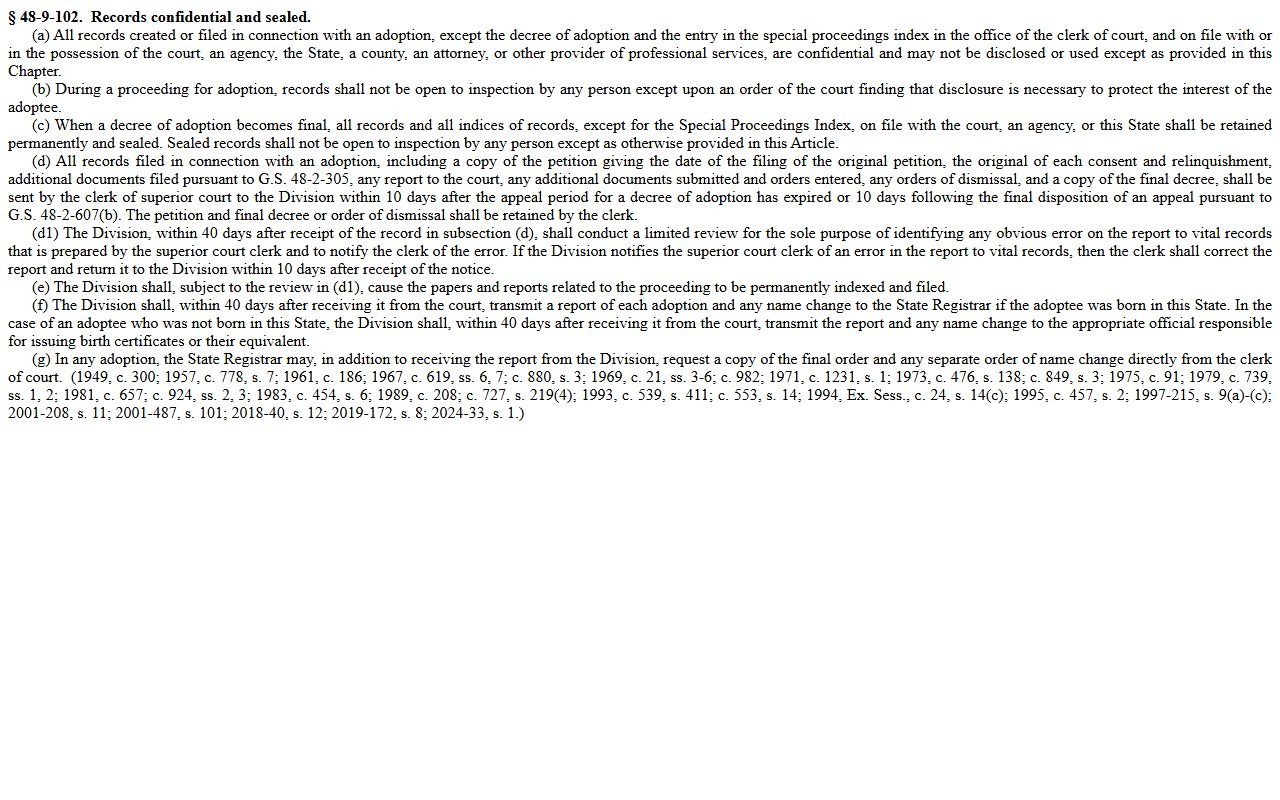
Adoption records are entirely separate. They are not probate records for public search. Under G.S. 48-9-102, adoption files are sealed and confidential. Access requires a statutory process or court authorization. Do not expect to find adoption records through an estate or probate search. Contested wills that move to Superior Court litigation may also produce restricted or sealed orders depending on the issues raised.
Personal identifiers are another restriction point. Social Security numbers, financial account numbers, and protected health information are not supposed to appear in the public portion of a court file. The clerk redacts or withholds this data. If you find such information in an old public filing, that does not make it proper to copy or distribute it.
Guardianship and Incompetency Proceedings
The Clerk of Superior Court handles incompetency and guardianship as special proceedings, not as ordinary civil lawsuits. These cases arise when a person can no longer manage their own affairs due to illness, disability, or injury. A petitioner, often a family member or a social services agency, files with the clerk. The clerk schedules an evaluation, and a multidisciplinary evaluation team or a doctor's report is submitted. The clerk then rules on competency, and if incompetency is found, appoints a guardian.
Guardians of the person manage decisions about housing, medical care, and daily life. Guardians of the estate manage property and finances. A general guardian handles both roles. In some cases, a limited guardianship covers only specific areas where the ward needs help, leaving other decisions to the ward. The clerk oversees the guardian's annual accounts and can require surety bonds for guardians of the estate.
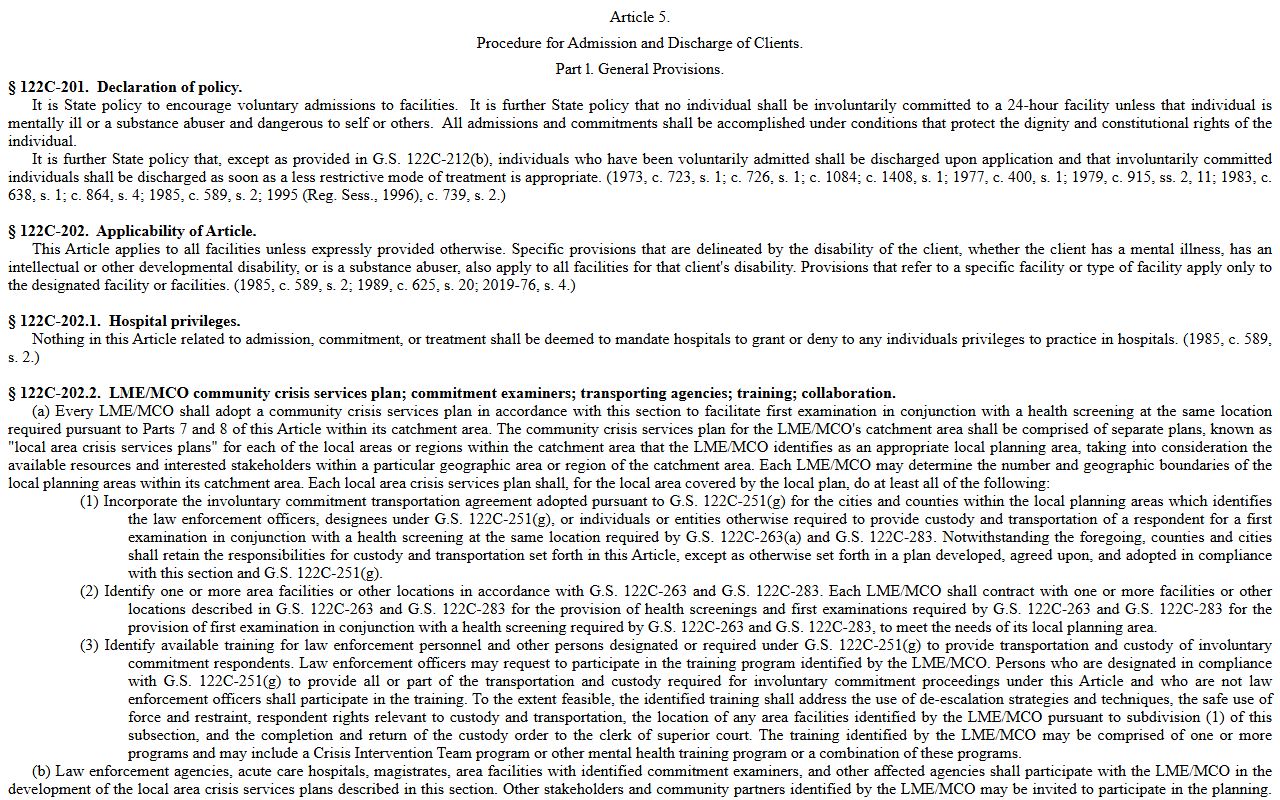
Because incompetency proceedings often involve medical reports, mental health evaluations, and private financial details, access to these files is more limited than access to a standard estate file. Mental health treatment records tied to an incompetency case carry confidentiality protections under Chapter 122C, Article 5. The clerk may restrict specific documents within a guardianship file while leaving the basic docket public. If you need access to restricted materials in a guardianship case, a motion and court order are the normal path.
Guardianship and incompetency are distinct from conservatorship in many states. North Carolina law uses the term guardianship for both personal and property management. The estate-related aspects of guardianship, such as inventory and accounting filings, overlap with standard probate practice under Chapter 28A.
Note: guardianship accounts filed with the clerk are distinct from court-ordered child support payments, which are handled through the domestic relations and child support enforcement processes.
Guilford County Probate Fees
Filing fees for estate administration, guardianship, and related special proceedings are set by the North Carolina Administrative Office of the Courts. No dollar amounts are listed here because fees are updated through the official AOC schedule and can change. Always confirm the current fee before you file or request copies.
| Item | Official Source |
|---|---|
| Estate filing / letters application fee | AOC fee schedule |
| Inventory and accounting filing | AOC fee schedule |
| Certified copy of estate document | AOC fee schedule |
| Guardianship / incompetency filing | AOC fee schedule |
| Small estate / collection by affidavit | AOC fee schedule |
| Year allowance petition | AOC fee schedule |
The Judicial Branch forms library is the place to get current estate and guardianship forms. Forms are state-issued and apply to Guilford County the same as any other county. Local rules and any Guilford County-specific instructions are on the Guilford County local rules and forms page. Court staff can explain what fees apply to a specific filing but cannot waive fees without a court order or approved indigency petition.
Key Probate Terms for Guilford County Filers
Estate law uses terms that are not part of everyday speech. Understanding these words before you contact the Estates Division or read a file makes the process faster. The definitions below follow North Carolina usage.
- Testator
- A person who made a valid will. If the testator died with that will in effect, the estate is testate. The will names an executor and sets out how property should pass.
- Executor
- The person named in the will and qualified by the clerk to act as personal representative. The executor collects assets, pays debts, and distributes property according to the will.
- Intestate
- Dying without a valid will. An intestate estate passes under North Carolina's statutes of descent and distribution, not by any instructions the decedent left. The clerk appoints an administrator to serve as personal representative.
- Guardianship
- Court-authorized authority over the person, the estate, or both for a minor or an incompetent adult. The clerk appoints the guardian and oversees annual accounts. North Carolina uses guardianship rather than the term conservatorship for property management.
- Conservatorship
- A term used in many other states for property-only management of an incapacitated adult's assets. In North Carolina, guardianship of the estate covers what conservatorship covers elsewhere. Filers from other states should translate accordingly.
Other terms that appear often in Guilford County estate files include administrator (appointed when no executor can serve), letters testamentary and letters of administration (the clerk-issued documents giving the personal representative authority to act), inventory (a filed list and valuation of estate assets), accounting (a report of receipts, disbursements, and distributions), caveat (a challenge to a will's validity), and year allowance (a statutory family benefit in qualifying estates). Knowing these before you file or search saves confusion at the counter.